If you are trying to understand Pleasant Hill, the biggest surprise is this: it is not one-note. One part of the city feels more walkable and mixed-use, another feels rooted in postwar single-family streets, and another is shaped by freeway, BART, and trail access. If you want to compare neighborhoods or make sense of home styles before you buy or sell, this guide will help you read the city with more confidence. Let’s dive in.
How Pleasant Hill Is Laid Out
Pleasant Hill is shaped by a few major anchors that influence how each area feels day to day. Interstate 680 runs along the eastern edge, while the Monument Boulevard and Contra Costa Boulevard core forms an important commercial and civic center. Key local routes like Gregory Lane, Oak Park Boulevard, Pleasant Hill Road, Taylor Boulevard, Boyd Road, and Chilpancingo Parkway help connect the city’s different pockets.
That layout matters because it creates clear lifestyle tradeoffs. Some areas give you quicker regional access, while others feel more tucked into established residential streets. The city also points residents toward BART, County Connection, and local bike and pedestrian routes, which adds another layer when you compare convenience from one pocket to the next.
Downtown And Core Areas
Downtown Pleasant Hill
Downtown Pleasant Hill was intentionally planned as a mixed-use, pedestrian-oriented center. The city describes it as a place with traditional architecture and a blend of retail, entertainment, residential, and civic uses. If you want the most urban-feeling pocket in Pleasant Hill, this is usually the first area to study.
The downtown project grew around Contra Costa Boulevard and Monument Boulevard, with City Hall opening in 1991 and the broader downtown project reaching its grand opening in 2000. The project also included 36 townhomes, which helps explain why housing in and around downtown often feels more compact and connected to nearby shops and services than in older single-family sections of the city.
Monument And Contra Costa Core
The Monument Boulevard and Contra Costa Boulevard area is one of the city’s main comparison points for buyers who value convenience and a more connected daily routine. Because this area was planned around mixed uses, it tends to appeal to people who want easier access to civic spaces, retail, and major routes.
For sellers, this location context can shape how you position a home. Instead of focusing on yard size or a classic tract setting, homes in this part of Pleasant Hill are often better understood through access, layout efficiency, and proximity to the city’s central core.
Older Neighborhood Pockets
Gregory Gardens
Gregory Gardens is one of Pleasant Hill’s best-known postwar neighborhood areas. City documents describe Gregory Gardens No. 6 as an early-1950s subdivision, and the broader growth pattern north of Gregory Lane between 1946 and 1954 helps explain the neighborhood’s strong suburban identity.
This is the kind of area many buyers picture when they think of classic Pleasant Hill. You will often see established single-family patterns, mature landscaping, and a neighborhood layout that reflects mid-century subdivision planning rather than newer compact development.
Poet’s Corner
Poet’s Corner is one of the city’s more clearly defined neighborhood pockets. The city places it roughly between Oak Park Boulevard, the Contra Costa Canal, Boyd Road, and Patterson Boulevard, and notes that its original irrigation system served about 475 homes.
What makes Poet’s Corner stand out is its combination of established housing and a recognizable boundary. For buyers, that can make it easier to understand the neighborhood’s character. For sellers, it often means buyers come in with a more specific idea of what they are looking for.
Sherman Acres, College Park, And Fair Oaks
Pleasant Hill’s general plan identifies Sherman Acres, College Park, and Fair Oaks as older neighborhoods as well. These areas fit into the city’s layered development history, where residential growth happened in stages rather than all at once.
That matters because older Pleasant Hill neighborhoods are not perfectly uniform. Instead of block after block of the same plan, you may find more variety in home age, street rhythm, and lot patterns. That can be a real advantage if you value character and individuality over a more standardized subdivision feel.
East Side And Transit-Connected Areas
Freeway And BART Access
The east side of Pleasant Hill is the most route-oriented part of town. Interstate 680 runs along the city’s eastern edge, and the general plan identifies Coggins Drive as serving the Pleasant Hill BART Station area.
If commute efficiency is high on your list, this side of town deserves a close look. Oak Park Boulevard and Taylor Boulevard provide direct access to regional and local destinations, and parts of Monument Boulevard east of I-680 function as commercial frontage. In practical terms, many buyers here are balancing convenience with a different yard-and-density pattern than they may find in older interior neighborhoods.
Oak Park Area
Recent city projects help show how the Oak Park side of Pleasant Hill functions in daily life. The Oak Park Boulevard sidewalk gap project was designed to connect residents to Pleasant Hill Middle School, the library, Pleasant Oaks Park, pedestrian trails, and future athletic fields.
That tells you a lot about how this area works. It is not just about driving access. It also offers useful local connections for everyday errands, park use, and getting around on foot within the immediate area.
Parks And Trail-Oriented Living
Pleasant Hill’s park system plays a major role in how certain neighborhoods feel. The city identifies Pleasant Hill Park, Pleasant Oaks Park, and Chilpancingo Park as major facilities, and these parks help shape the experience of nearby streets.
If you spend a lot of time outdoors, location near parks and trails can change how a home lives day to day. A home near one of these park areas may feel more connected to recreation, open space, and casual walking routes, even if the house itself is similar in size or age to homes elsewhere in the city.
Iron Horse And Canal Connections
Trail access is another meaningful part of Pleasant Hill’s layout. The city’s planning documents identify trail links along the Contra Costa Canal, the EBMUD right-of-way, and the Iron Horse corridor, while the Iron Horse corridor is described as an 18-mile trail network used for walking and biking.
For some buyers, this is a major quality-of-life feature. Homes closer to the Canal or Iron Horse trail network can feel more plugged into Pleasant Hill’s recreation system and everyday mobility options.
Pleasant Hill Home Styles Explained
Older Homes Have More Variety
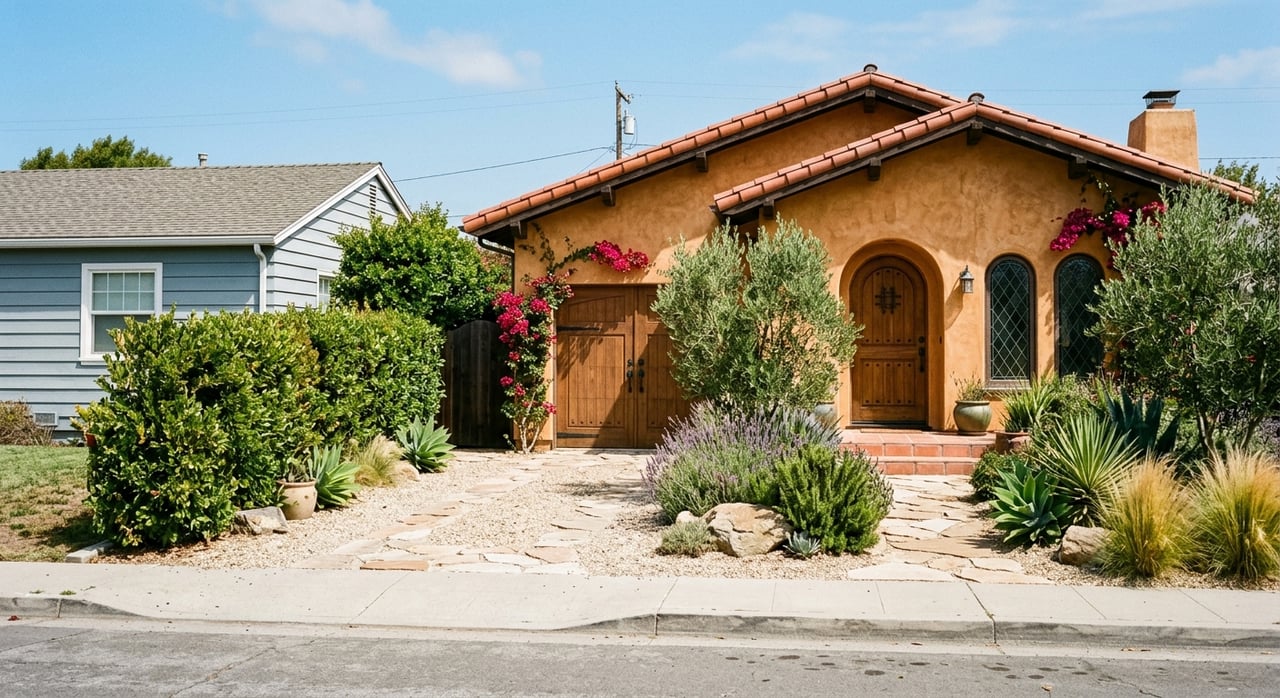
Pleasant Hill’s older housing stock is stylistically mixed rather than uniform. The city’s historic-resource inventory includes one-story cottages, ranch-style houses, an Arts and Crafts bungalow, a Berkeley-style shingle house, two-story farmhouse and cottage forms, and California and Italian style structures.
That variety helps explain why older streets can feel more interesting from one block to the next. If you are coming from a market where neighborhoods were built all at once, Pleasant Hill may feel more layered and less predictable in a good way.
Ranch Homes And Cottages
Many buyers searching Pleasant Hill are drawn to practical, single-level living and familiar suburban layouts. Ranch-style homes and one-story cottages fit naturally into that conversation because they appear in the city’s older housing mix and align with the postwar growth pattern seen in neighborhoods like Gregory Gardens.
These homes often attract buyers looking for usability, remodeling potential, or a more traditional single-family setup. For sellers, it helps to frame these homes around layout, lot use, and how they fit into the surrounding neighborhood pattern.
Newer Infill And Townhomes
Newer and denser housing is most visible in downtown Pleasant Hill. The downtown project included townhomes as part of its mixed-use plan, which gives that area a different housing profile from older single-family districts.
There are also examples of infill that borrow from traditional design language. In Poet’s Corner, a subdivision proposal called for four detached two-story homes with bungalow- and Craftsman-inspired architecture. That is a good example of how newer homes in Pleasant Hill may use more compact footprints while still referencing established neighborhood character.
Lot Sizes And What They Mean
Pleasant Hill includes meaningful variation in lot size. City zoning examples identify an R-7 single-family district with 7,000-square-foot lots and an R-10 district with 10,000-square-foot lots.
At the larger end, city subdivision material for Oak Park Lane describes a 52,620-square-foot parcel being split into two legal parcels measuring 23,630 and 27,456 net square feet. The main takeaway is simple: lot size can vary a lot from one part of Pleasant Hill to another.
That matters whether you are buying or selling. Buyers may care about outdoor space, side-yard separation, or future flexibility for remodeling. Sellers benefit from understanding how their lot compares with nearby competition, since lot pattern is often part of what makes one Pleasant Hill pocket feel different from another.
How To Compare Neighborhoods
If you are trying to narrow your search, it helps to start with your top priority rather than a neighborhood name alone. Pleasant Hill becomes easier to understand when you compare it by lifestyle needs.
Here is a simple way to think about it:
- If you want walkable mixed-use surroundings, focus first on downtown and the Monument and Contra Costa core.
- If you prefer established single-family streets with mature landscaping and classic suburban character, look closely at Gregory Gardens, Poet’s Corner, Sherman Acres, College Park, and Fair Oaks.
- If commute efficiency matters most, study the east-side areas near I-680, BART, Oak Park Boulevard, and Taylor Boulevard.
- If yard size or future flexibility is a priority, pay close attention to lot size, zoning patterns, and larger-parcel areas.
What Sellers Should Know
If you are selling in Pleasant Hill, neighborhood context is not just background information. It shapes how buyers interpret your home from the start. A downtown townhome, a postwar ranch in Gregory Gardens, and a larger-lot property in a more spacious single-family setting are not competing in the same way, even if they share a ZIP code.
That is why local positioning matters. The right pricing strategy and marketing story should reflect the neighborhood pocket, the home style, the lot pattern, and the kind of convenience your location offers. In a city with this much variety, broad labels usually miss the details that help a home stand out.
If you want help thinking through Pleasant Hill neighborhood differences or how your home fits the market, Dean Okamura brings a practical, hands-on approach to helping buyers and sellers make clear, confident decisions.
FAQs
What are the main neighborhood types in Pleasant Hill?
- Pleasant Hill generally breaks into a few broad categories: the downtown and Monument or Contra Costa core, older single-family neighborhoods like Gregory Gardens and Poet’s Corner, east-side areas shaped by I-680 and BART access, and pockets connected to parks and trails.
What home styles are common in Pleasant Hill?
- Pleasant Hill includes a mix of one-story cottages, ranch-style houses, Arts and Crafts bungalow examples, Berkeley-style shingle homes, farmhouse and cottage forms, and some California and Italian style structures, according to city planning documents.
Which Pleasant Hill areas feel most walkable and mixed-use?
- The downtown area and the Monument and Contra Costa Boulevard core are the city’s clearest mixed-use and pedestrian-oriented comparison points.
Which Pleasant Hill neighborhoods have an older suburban feel?
- Gregory Gardens, Poet’s Corner, Sherman Acres, College Park, and Fair Oaks are identified by the city as older neighborhood areas and are often associated with established single-family streets and mature landscaping.
Are lot sizes the same across Pleasant Hill neighborhoods?
- No. City documents show that lot sizes vary, with examples including 7,000-square-foot lots, 10,000-square-foot lots, and some much larger parcels in certain areas.
What part of Pleasant Hill is best for commute access?
- The east side of Pleasant Hill is the most route-connected part of town, especially areas near I-680, the Pleasant Hill BART Station area, Oak Park Boulevard, and Taylor Boulevard.