Ask a handful of homeowners in the Walnut Creek hills whether their listing needs a fire inspection before closing, and most will guess based on the wrong signal. They think about how their street looks compared to the flats, or how close last year's grass fire got, or something a neighbor mentioned at a barbecue. None of that decides the question. What decides it is a single state map, drawn parcel by parcel by the State Fire Marshal, and if your address falls inside that boundary, it is worth planning for compliance early in the sale process.
For a home in the flatter parts of the city, this entire topic may be irrelevant. For a specific cluster of hillside and canyon-adjacent addresses, it is not optional, and getting the timing wrong can put a closing date at risk over paperwork that has nothing to do with the inspection contingency or the sale price.
The City Splits at the Foothills, Not at Downtown
Walnut Creek is an incorporated city, which places nearly all of it in what the state calls a Local Responsibility Area. Inside an LRA, the State Fire Marshal only designates one tier that triggers a real estate disclosure: Very High. There's no mapped Moderate or High zone inside city limits the way there is in the unincorporated hill country nearby, since those middle tiers belong to a different designation, the State Responsibility Area. So the real question for a Walnut Creek seller isn't how risky a neighborhood feels. It's whether a specific parcel falls inside the Very High boundary on the city's current Local Responsibility Area fire hazard map, last revised by the State Fire Marshal in February 2025.
The mapped, higher-risk parcels cluster in a predictable pattern: Rudgear Estates, portions of hillside Buena Vista, and the northern Walnut Creek properties that back up to Shell Ridge Open Space and Lime Ridge Open Space. These are the lots where the grassland and oak woodland that make the open space trails so pleasant also sit close enough to a structure to carry fuel toward it during a wind event.
Valley floor neighborhoods sit outside that boundary entirely. Downtown, Parkmead, Tice Valley, Walnut Heights, Lakewood, and South Walnut Creek fall in the lower-risk category, with standard insurance availability and no defensible space inspection tied to a sale.
| Area | Typical FHSZ status | What it means at listing |
|---|---|---|
| Rudgear Estates, hillside Buena Vista, parcels near Shell Ridge and Lime Ridge Open Space | Mapped Very High (LRA) | Contra Costa County Fire Protection District requires a defensible space inspection; the Contra Costa Association of Realtors says pre-2010 homes also have a fire hardening disclosure requirement |
| Downtown, Parkmead, Tice Valley, Walnut Heights, Lakewood, South Walnut Creek | Not mapped | No defensible space inspection tied to the sale |
Two Documents, Two Different Jobs
California actually asks a seller in a mapped zone for two separate things, and mixing them up is where most confusion starts.
The first is the Fire Hardening and Defensible Space Advisory, a disclosure form that has applied since January 1, 2021 to any home built before 2010 sitting in a high or very high zone. It asks the seller to state what hardening features the house already has: the roofing material, whether the eaves are enclosed, what kind of glazing sits in the windows. It's a disclosure, not a pass or fail. Nobody shows up to grade it.
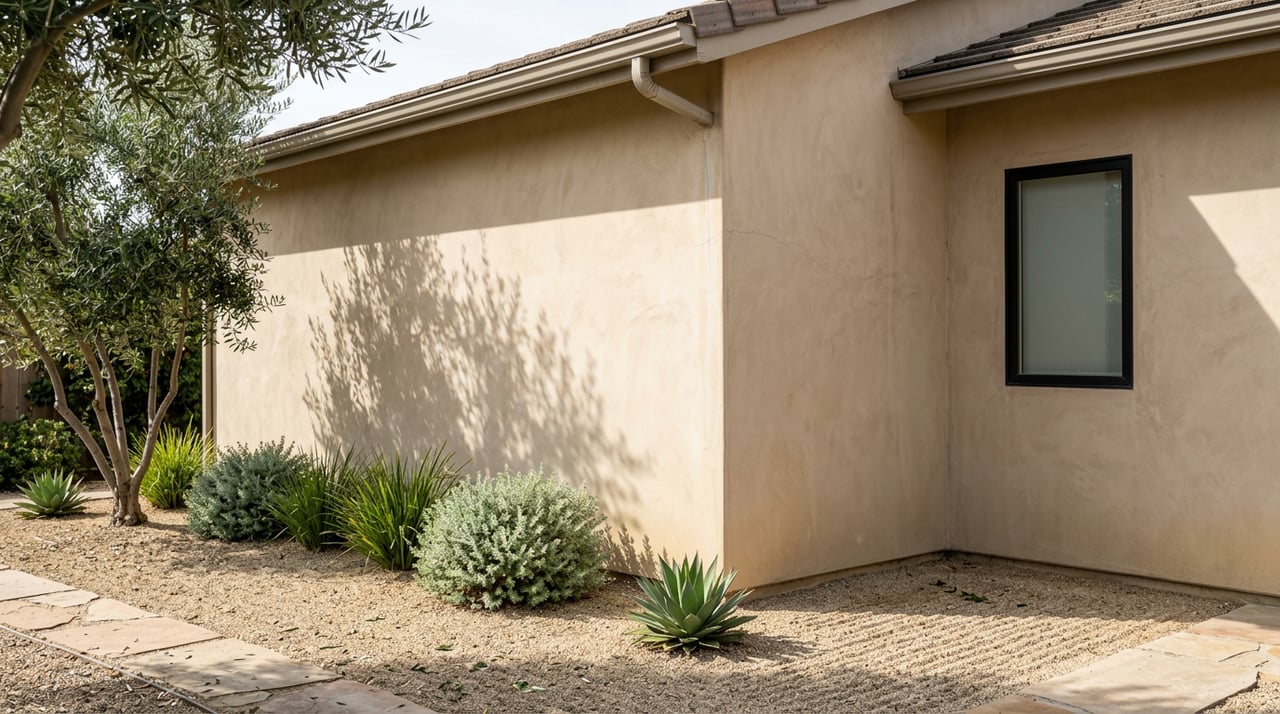
The second is the actual defensible space inspection required under AB-38, in effect since July 1, 2021. This one involves someone coming to the property. It checks whether the vegetation and clearance around the structure meet CAL FIRE's defensible space standard under Public Resources Code 4291, broken into zones that stretch out from the foundation, starting with the five feet closest to the house where combustible material like mulch, decking, and stored furniture gets the strictest scrutiny.
The Six-Month Window Is Measured From the Sales Contract, Not Closing
Here is the detail that catches sellers off guard. The compliance report from a defensible space inspection has a limited validity period. A seller who waits until an offer is in hand to think about scheduling this inspection may leave less time to address deficiencies or scheduling delays.
In Contra Costa County, the agency responsible for these inspections inside Walnut Creek is the Contra Costa County Fire Protection District, operating under local Ordinance 2023-07. The Contra Costa Association of Realtors advises members to request the inspection the moment a listing goes onto the MLS, because it can take roughly a week just to get a response and schedule a visit. That's before accounting for what happens if the property doesn't pass on the first try.
It often doesn't, depending on the season. The defensible space standard requires grass cut to four inches or less and dead vegetation cleared from around the structure. A property that clears inspection easily during a wet Bay Area winter can pick up deficiencies after a long dry summer, when uncut grass or accumulated leaf litter near the foundation violate the same zone requirements that were fine a few months earlier. If the first inspection turns up a deficiency, the inspector issues a report describing what needs correcting and schedules a second visit, which adds real days to a timeline that a standard home inspection contingency was never built to absorb.
If the Report Isn't Ready When You Go Into Contract
The law does build in a release valve. If a seller can't produce compliant documentation by the time escrow is set to close, AB-38 defensible space inspection guidance says the buyer and seller can sign a written agreement in which the buyer takes on the obligation to obtain the compliance documentation, with up to one year after closing to do it. That keeps a transaction from collapsing over an inspection scheduling backlog. It doesn't make the requirement disappear. It just moves who owns the follow-up, and moves it onto the buyer's calendar instead of the seller's.
What This Actually Means If You're Listing This Year
- Check your specific parcel, not your neighborhood's general reputation, against the city's current Local Responsibility Area Fire Hazard Severity Zone map before you set a list date.
- If your parcel falls inside the Very High boundary, request the defensible space inspection from Contra Costa County Fire Protection District the same week you decide to list, not after you accept an offer.
- Walk your own property against the defensible space zones before the inspector does. Clear anything combustible within the first five feet of the structure and confirm grass and dead vegetation are cut back.
- Complete the Fire Hardening and Defensible Space Advisory honestly. It only asks you to state what your home already has, not to retrofit anything.
- If your parcel sits in the mapped zone, talk to your insurance carrier early. Standard coverage isn't guaranteed in these pockets, and some owners end up pairing a California FAIR Plan policy with a difference-in-conditions policy to get full coverage.
A Few Questions Worth Asking Before You List
Does every home in Walnut Creek need this? No. Only parcels that fall inside the Very High Fire Hazard Severity Zone as mapped by the State Fire Marshal for Walnut Creek's Local Responsibility Area. Homes in Parkmead, Tice Valley, Walnut Heights, Lakewood, South Walnut Creek, and downtown typically fall outside that boundary.
What if an online risk score calls my home high risk but it's not on the state's map? The legal trigger is CAL FIRE's official Very High designation, not a private risk tool's score. A third-party site can label a property high risk using its own methodology while the state map places that same parcel outside the mapped zone, or the reverse. Confirm status against the official state map before assuming either way.
Who actually does the inspection? In Walnut Creek, the Contra Costa County Fire Protection District, under local Ordinance 2023-07.
What if I'm already in escrow and don't have the report yet? Buyer and seller can sign a written agreement shifting the obligation to the buyer, who then has up to a year after closing to obtain compliant documentation. It's a valid path, but it should be a deliberate decision made by both sides of the transaction, not a surprise discovered at the closing table.
None of this changes what a Walnut Creek hillside home is worth. It changes how smoothly the sale gets there, and that's exactly the kind of detail that either gets handled quietly weeks before a listing goes live or turns into a scramble two days before closing. If you're weighing a sale near Rudgear Estates, Buena Vista, or the open space edges of northern Walnut Creek and want a clear read on whether your parcel is mapped and a realistic timeline built around it, Dean Okamura has spent years coordinating exactly this kind of vendor and inspection logistics for local sellers. Reach out and let's talk through your specific address before you set a list date.
This article is general information, not legal, tax or financial advice. Consult a qualified professional about your situation.